
Travel tips
Mauritius Travel Tips: Essential Guide for First-Time Visitors
Practical, honest advice for a first trip: when to go, how to get around, what to pack and how to avoid the common mistakes.
By Codexia Ltd5 min read
In short
Mauritius is a warm, multicultural island where English and French are widely used, alongside Mauritian Creole. The local currency is the Mauritian rupee, the climate is tropical, and the best way to see more than your resort is to travel independently. Check current entry and health requirements with official sources before you go, pack light clothing and sun protection, and plan transport early.
A first trip to Mauritius is easy to enjoy and easy to over-plan. The island is compact, the people are welcoming and many visitors are happy to spend most of their time near a beach. If you also want to see waterfalls, villages, markets and viewpoints, a little preparation makes a big difference.
These tips are general guidance, not legal or medical advice. Entry rules, health requirements and prices change, so confirm anything important with official sources before you book.
When to go
Mauritius has a tropical climate with a warmer, wetter summer and a cooler, drier winter. Many travellers find the cooler months, roughly May to November in the southern hemisphere’s winter, the most comfortable for sightseeing, while the summer months are hotter and more humid with a higher chance of heavy rain. The cyclone season falls in the warmer months, so check weather forecasts and any official warnings close to your travel dates.
Entry requirements, passports and health
Requirements depend on your nationality and can change. Check the official government and your own country’s travel advice for visa rules, passport validity, any arrival forms and recommended health precautions. Carry a printed or offline copy of your booking details, and keep your passport and licence somewhere safe.
Money, cards and tipping
The local currency is the Mauritian rupee (MUR). Cards are widely accepted in hotels, restaurants and shops in tourist areas, while cash is useful in markets, small shops and some local restaurants. ATMs are easy to find in towns. Tipping practice varies, and a small tip for good service is appreciated but is not obligatory in most places.
Language and customs
English and French are widely used, and Mauritian Creole is the everyday language of most people. A friendly “bonjour” goes a long way. Mauritius is multicultural, with Hindu, Christian, Muslim and other communities living side by side, so dress modestly when visiting temples, mosques and churches, and ask before photographing people or religious ceremonies.
Getting around the island
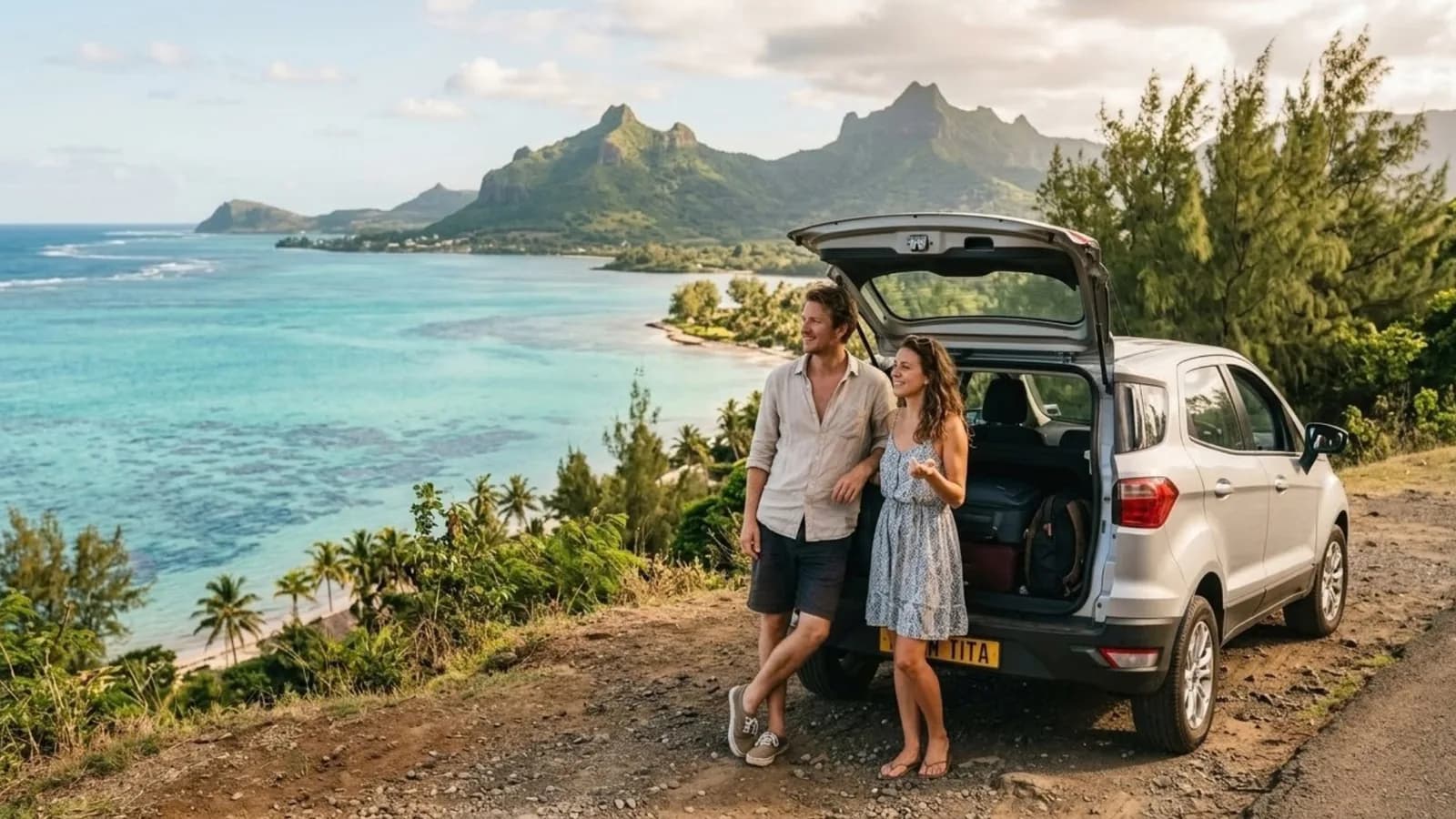
Buses connect most towns and are cheap, but they are slow, and routes to remote viewpoints and quiet beaches are limited. Taxis and private transfers are comfortable, though costs add up over several days. A rental car is the most flexible option for exploring beyond your resort. Read our guide on whether renting a car is worth it and our driving guide.
| Option | Best for | Watch out for |
|---|---|---|
| Rental car | Flexibility, families, multiple areas | Left-hand driving; parking in busy towns |
| Taxi / private transfer | Airport runs and single trips | Costs add up over several days |
| Public bus | Budget travel between towns | Slow, limited reach to viewpoints and beaches |
What to pack
- Light, breathable clothing, a swimsuit and a light rain jacket for sudden showers.
- A hat, sunglasses and reef-friendly sun protection: the sun is strong year-round.
- Comfortable closed shoes or trainers for waterfalls, trails and viewpoints.
- Insect repellent, especially in the evenings.
- A reusable water bottle and a small day bag.
- Your driving licence and an offline copy of your booking confirmations.
Staying connected
Mobile data is useful for maps and translation. You can use a local SIM card, an eSIM or your home plan. If you want data from the moment you arrive, you can add a tourist SIM card as an extra when you book your car.
Plan around distances and traffic
The island is small, but traffic around Port Louis and Grand Baie can slow journeys considerably, and hill roads are winding. A realistic plan is to base each day in one area, such as the north or the south-west, rather than crossing the island repeatedly.
Safety and common-sense tips
- Do not leave valuables visible in a parked car or on the beach.
- Drink bottled or properly filtered water if you are unsure about the tap water at your accommodation.
- Respect warning flags and signs at beaches and swim only in areas that are safe.
- Keep a note of the emergency numbers for your trip and the assistance number for your rental car.
First-timer mistakes to avoid
- Trying to see the whole island in two or three days.
- Booking transport at the last minute in the busy season.
- Underestimating travel times on winding or congested roads.
- Forgetting sun protection and drinking water on long days out.
For ideas on what to see, start with our guide to the top attractions by car and the best beaches.
Eating out: what to try
Mauritian food reflects the island’s mix of cultures. Look for dholl puri (thin flatbreads with split-pea filling), gâteaux piments (chilli fritters), rougaille (a tomato-based creole dish), fresh seafood and, in the evening, street snacks and sweet treats at local markets. Small local restaurants are often the best value, and many places will happily adjust spice levels if you ask.
Respecting the island and its environment
- Take your rubbish with you from beaches and viewpoints.
- Do not touch or stand on coral, and choose reef-friendly sun protection.
- Stay on marked paths in nature reserves and national parks.
- Ask permission before photographing people, and be discreet around places of worship.
Frequently asked questions
- What is the best time to visit Mauritius?
- Many visitors prefer the cooler, drier months for sightseeing, while the warmer months are hotter, more humid and wetter. The best time depends on your priorities, so check forecasts before booking.
- What currency is used in Mauritius?
- The Mauritian rupee (MUR). Cards are widely accepted in tourist areas, and cash is useful in markets and small shops.
- Do people speak English?
- Yes. English and French are widely spoken, and Mauritian Creole is the everyday language.
- Is it worth renting a car for a first trip?
- If you want to explore beyond your resort, yes: a car gives you the most flexibility. For a single-resort stay, taxis and transfers may be enough.
Related articles
Attractions
Top Attractions to Visit in Mauritius by Car
Discover Chamarel, Trou aux Cerfs, Le Morne and more of Mauritius’ must-see attractions with the freedom of your own rental car.
· 6 min read
Read Full ArticleCar rental guide
Is It Worth Renting a Car in Mauritius? Car Hire vs Taxi & Transfers
Compare rental cars, taxis and private transfers to find the most convenient and flexible way to explore Mauritius.
· 5 min read
Read Full ArticleTraveller guides
Renting a Car in Mauritius for South African Travellers: Complete Guide
Planning a Mauritius holiday from South Africa? Learn about licences, driving, airport pickup and choosing the right rental car.
· 4 min read
Read Full Article
Your Mauritius road trip starts here
Choose your car, add the extras you need and collect it at the airport.