
Driving guide
Driving in Mauritius: Complete Guide for Tourists
Left-hand traffic, roundabouts, mountain bends and a lively local driving style: what to expect and how to stay relaxed behind the wheel.
By Codexia Ltd6 min read
In short
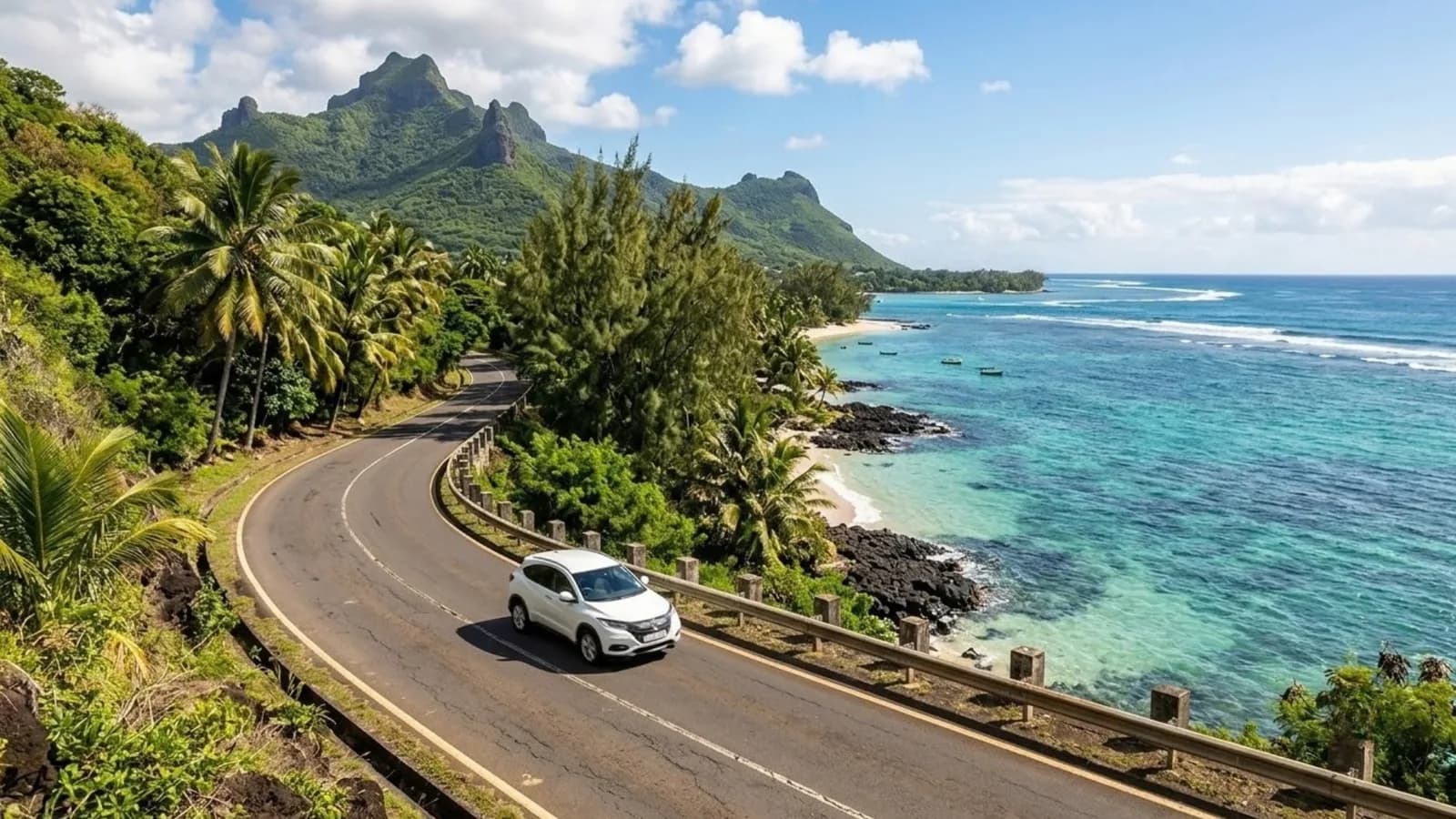
Traffic in Mauritius drives on the left and the main roads are paved and generally well signed. Speed limits are typically lower in built-up areas, around 80 km/h on open roads and higher on the motorways, but you must always follow the signs you actually see. Expect roundabouts, speed cameras, buses and motorbikes, heavier traffic around Port Louis and Grand Baie, and winding roads in the hills.
Driving is the best way to see Mauritius, and for most visitors it is easier than expected. The roads between the main towns and resorts are paved, signs are in English and French, and distances are short. What takes a little adjustment is the combination of left-hand traffic, busy roundabouts and a local driving style that is quicker and more assertive than many visitors are used to.
This guide covers the essentials. Rules and limits can change, so treat it as practical orientation and always check current requirements with the authorities and your rental company before you travel.
Driving on the left
Mauritius drives on the left, as in the United Kingdom, South Africa and Australia. The driver sits on the right side of the car. If you are used to right-hand traffic, the first hour is the hardest: take it slowly on quiet roads, say the rule out loud at junctions (“keep left”) and be extra careful when turning, because the natural instinct is to drift to the wrong side.
- At roundabouts, give way to traffic already on the roundabout and travel clockwise.
- When overtaking, pass on the right.
- On multi-lane roads, keep left unless you are overtaking.
- After parking or a break, re-check which side of the road you are joining.
Speed limits and enforcement
As a general guide, limits are lower in towns and villages, around 80 km/h on open roads outside built-up areas and 110 km/h on the motorways. Sources quote slightly different figures for built-up areas, which is exactly why the posted sign always wins over any guide. Speed cameras and mobile checks are used, so there is no benefit in speeding.
| Road type | Typical limit | Notes |
|---|---|---|
| Towns and villages | Lower limit, as signed | Pedestrians, school zones and speed bumps are common |
| Open roads | Around 80 km/h | Winding sections may be signed lower |
| Motorways | Around 110 km/h | The M1 and M2 link Port Louis with the airport and the north |
Roundabouts, signs and road markings
Mauritius uses many roundabouts, often with several exits and heavy traffic. Approach at a steady speed, choose your lane early and signal your exit. Road signs are in English and French, and place names are usually shown on direction signs. Navigation apps on your phone work well; keep the phone in a holder and set your route before you start driving.
Local driving style
Drivers in Mauritius can be quick to overtake and slow to leave gaps. Buses stop often and without warning, motorbikes and scooters filter through traffic, and pedestrians sometimes cross where there is no crossing. The best response is to stay calm, keep a larger gap than you would at home and avoid reacting to impatient drivers behind you. A short, friendly flash of the lights or a wave is part of the local etiquette when someone lets you through.
Traffic hotspots and the best times to drive
Port Louis and the roads into it are busy in the morning and late afternoon, and the Grand Baie area slows down in the evening and at weekends. Cross-island routes are far more pleasant mid-morning or early afternoon. If you have a flight to catch, leave extra time for the drive to the airport.
Hill roads and weather
The central plateau and the south-west have steep, winding roads, and heavy rain can arrive quickly, reducing visibility and making surfaces slippery. Slow down, use your lights and avoid stopping on blind bends. In cyclone season, follow official weather warnings and local advice.
Parking
Parking is straightforward in most beach areas and attractions, but harder in Port Louis, Grand Baie and busy market towns. Use car parks where possible, follow local signs about where parking is allowed, and never leave valuables visible. If you are unsure whether a space is legal, find another one.
Licences, age and safe-driving basics
Visitors need a valid driving licence. Licence recognition and the need for an International Driving Permit can depend on where your licence was issued and its language, so confirm this before travelling. Codexia’s own rental conditions require a minimum driver age and a minimum period of holding your licence: see the rental conditions and our FAQ.
- Wear a seat belt. Make sure every passenger does too.
- Never drive after drinking alcohol; limits are low and checks happen.
- Do not use a hand-held phone while driving.
- Child passengers need appropriate child seats: a booster or baby seat can be added when you book.
If something goes wrong
If you have a breakdown or an incident, keep yourself and your passengers safe first, then contact the emergency services if needed and call us. Our team provides 24/7 assistance; the numbers are in your booking confirmation and on our contact page. Do not attempt repairs yourself.
Your first-day checklist
- Adjust the seat, mirrors and steering wheel before you leave the car park, and locate the indicators and wipers: on some cars they are on opposite sides to what you are used to.
- Set your destination in the navigation app and start the route while parked.
- Choose a quiet road for the first twenty minutes, and avoid rush hour on day one.
- Say “keep left” out loud at every junction until it becomes automatic.
- Plan a break after the first hour: concentration is the real challenge, not skill.
Driving at night and in the rain
Many rural roads are poorly lit, with pedestrians, cyclists and animals sometimes on the verge, and heavy showers can arrive in minutes. If you are not confident, keep long journeys for daylight and use dipped headlights in rain or poor visibility. Increase your following distance on wet roads: stopping takes longer than you expect.
Frequently asked questions
- Which side of the road do you drive on in Mauritius?
- On the left. The driver sits on the right-hand side of the car.
- Is it difficult for tourists to drive in Mauritius?
- Most visitors find it manageable. The main challenges are left-hand traffic, roundabouts, busy roads around Port Louis and Grand Baie, and winding hill roads.
- Should I rent an automatic or a manual car?
- If you are not used to driving on the left, an automatic is easier because you do not have to change gear with your left hand while concentrating on traffic.
- Can I use my phone for navigation?
- Yes, a navigation app works well. Use a phone holder, set the route before you start and never hold the phone while driving.
- Do I need an International Driving Permit?
- It depends on where and in which language your licence was issued. Check current requirements with the authorities and with us before you travel.
Related articles
Car rental guide
Mauritius Car Rental Guide: Everything You Need to Know Before Booking
Compare vehicle types, insurance, deposits, documents and rental conditions before hiring a car for your Mauritius holiday.
· 5 min read
Read Full ArticleAirport pickup
Mauritius Airport Car Rental: SSR Airport Pickup Guide
Arriving at Mauritius Airport? Learn how car rental pickup works and how to start your island journey quickly and comfortably.
· 5 min read
Read Full ArticleTravel tips
Mauritius Travel Tips: Essential Guide for First-Time Visitors
From money and weather to transport and local customs, prepare for your first Mauritius holiday with these practical travel tips.
· 5 min read
Read Full Article
Your Mauritius road trip starts here
Choose your car, add the extras you need and collect it at the airport.