
Attractions
Top Attractions to Visit in Mauritius by Car
The island’s best-known sights are spread across every corner of it. A car turns a rushed checklist into an unhurried journey.
By Codexia Ltd6 min read
In short
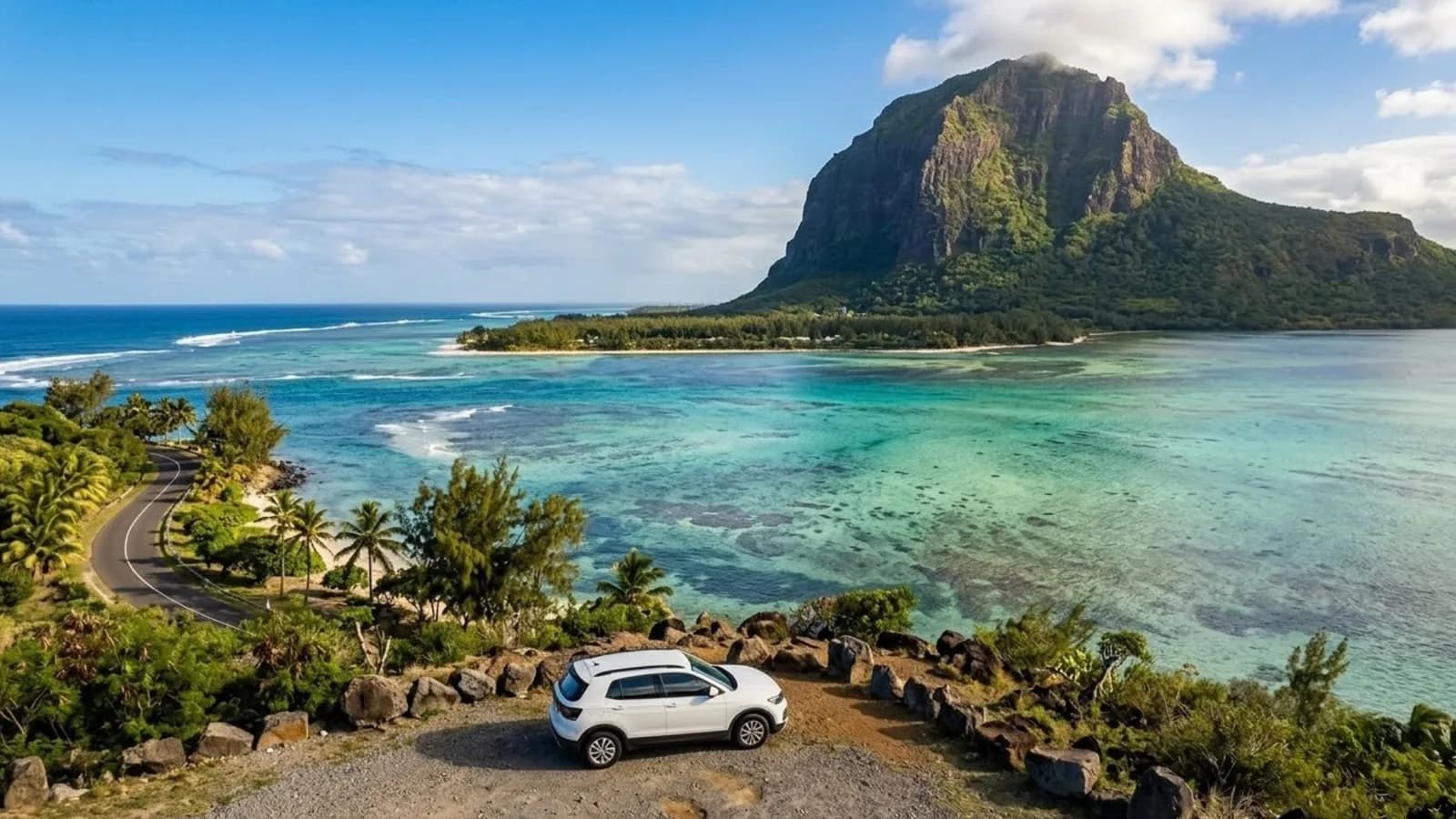
Mauritius is roughly 65 km long and 45 km wide, but its highlights are scattered: the crater of Trou aux Cerfs and Grand Bassin in the central plateau, the coloured earths of Chamarel and Black River Gorges in the south-west, Le Morne in the far south-west, and Pamplemousses and Cap Malheureux in the north. Public transport rarely links them efficiently, so a rental car is the simplest way to see several in a day.
Mauritius looks small on a map, and that is exactly why visitors underestimate it. Beaches, volcanic craters, sacred lakes, botanical gardens and mountain viewpoints sit in different corners of the island, often down narrow side roads that buses simply do not use. With your own car you decide when to leave, where to stop and how long to stay.
This guide groups the best-known attractions by area, so you can plan realistic days rather than zig-zagging across the island. If you have not yet chosen a vehicle, our fleet covers everything from compact city cars to a seven-seater for the whole family.
The central plateau: Trou aux Cerfs and Grand Bassin
Trou aux Cerfs is a dormant volcanic crater above the town of Curepipe. A short road takes you to the rim, where on a clear day you can look across the crater and out over the island. The weather up here changes quickly and is often cooler and cloudier than on the coast, so keep a light jacket in the car.
From the plateau, a scenic road continues to Grand Bassin (Ganga Talao), a crater lake that is among the most important Hindu pilgrimage sites outside India. It is an active place of worship: dress modestly, keep your voice down and follow the guidance of the people there.
The south-west: Chamarel, Black River Gorges and the coast
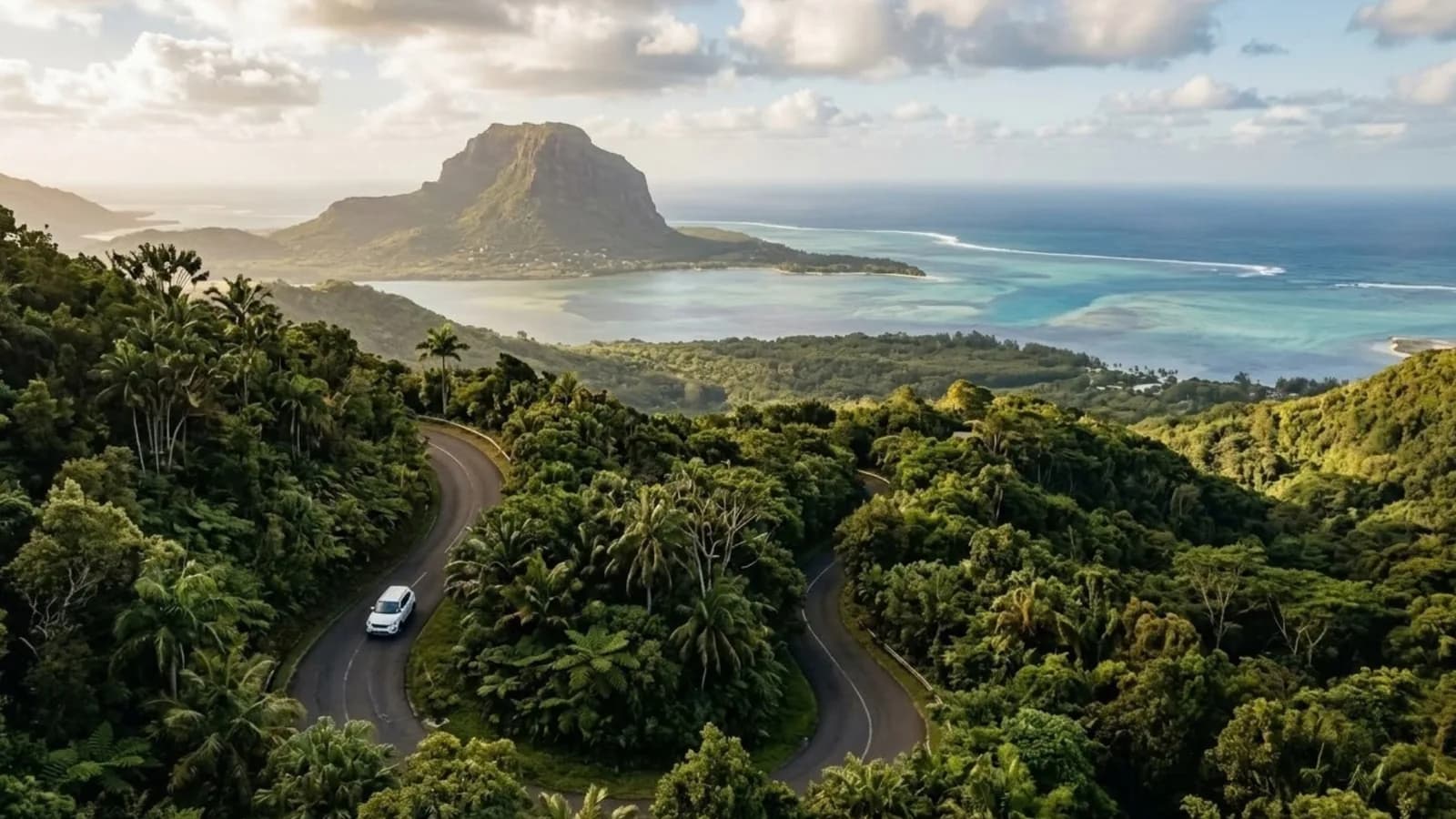
Chamarel is the day trip most visitors build their holiday around. The Seven Coloured Earth is a small area of dunes whose bands of red, brown, violet and green are visible side by side, and a short drive away a tall waterfall drops into a forested gorge. The road up to Chamarel is steep and winding in places, which is a good reason to be comfortable with your vehicle before you set off.
Nearby, Black River Gorges National Park protects most of the island’s remaining native forest and offers marked walking trails and lookout points. Bring water, sturdy shoes and allow more time than you think you need: distances look short, but the roads are slow.
Combining the south-west in one day
- Start early at the Black River Gorges viewpoints, when the air is clear.
- Continue to Chamarel for the coloured earth and the waterfall.
- Finish at the coast near Le Morne or Tamarin for a late swim and sunset.
Le Morne: the mountain and the lagoon
Le Morne Brabant is the dramatic rock at the south-western tip of the island, recognised as a UNESCO World Heritage site for its history as a refuge for escaped slaves. The surrounding beaches and lagoon are among the most photographed in Mauritius, and the area is popular for kitesurfing. A rental car lets you pull over at the roadside viewpoints and choose a quieter stretch of beach. If you want to start your trip here, we can deliver your car to Le Morne.
The north: Pamplemousses, Grand Baie and Cap Malheureux
The Sir Seewoosagur Ramgoolam Botanical Garden at Pamplemousses is one of the oldest botanical gardens in the southern hemisphere and is known for its giant water lilies. Further north, Grand Baie is the island’s busiest resort town, with restaurants, shops and boat trips, while Cap Malheureux is best known for its red-roofed chapel set against the sea, with Coin de Mire islet visible offshore.
The east and south-east: Belle Mare, Île aux Cerfs and Mahébourg
The east coast is known for long, calm beaches such as Belle Mare. From Trou d’Eau Douce, boats run to Île aux Cerfs, a small island with beaches and water sports. In the south-east, Mahébourg is a historic port town with a weekly market, and it is close to the airport, which makes it a convenient first or last stop. You can collect your car at Belle Mare or Mahébourg if you are staying in that area.
Port Louis
The capital has a central market, the waterfront at Caudan and a number of museums and historic buildings. Traffic and parking are the main challenge, so plan to arrive outside the morning and evening rush and use a car park rather than looking for a space on the street.
| Area | Main stops | Good to know |
|---|---|---|
| Central plateau | Trou aux Cerfs, Grand Bassin | Cooler, often cloudy; allow time for winding roads |
| South-west | Black River Gorges, Chamarel, Le Morne | Early start; steep sections near Chamarel |
| North | Pamplemousses, Grand Baie, Cap Malheureux | Busy around Grand Baie in the evening |
| East / south-east | Belle Mare, Île aux Cerfs, Mahébourg | Boat trips run from Trou d’Eau Douce |
Practical tips for visiting attractions by car
- Mauritius drives on the left. Read our driving guide before your first day.
- Allow generous time: a short distance on the map can take much longer on winding or congested roads.
- Carry water, sun protection and a charged phone. A tourist SIM card can be added to your booking as an extra.
- Park only in clearly legal spaces and never leave valuables visible in the car.
- Fill the tank before heading into the hills; stations are less frequent on the plateau and in the south-west.
Rainy-day and flexible alternatives
Tropical weather is changeable. If rain closes in on the plateau or the south-west, switch to indoor or coastal stops: the markets and museums of Port Louis, a long lunch in Grand Baie, or the sheltered lagoon beaches on the drier west coast. Having a car makes it easy to chase the better weather instead of cancelling the day.
Frequently asked questions
- How many days do you need to see the main attractions in Mauritius?
- Five to seven days is comfortable for the main highlights if you group them by area. Fewer days are possible, but you will spend more time in the car.
- Is it easy to reach Chamarel and Le Morne without a car?
- Public buses reach some of these areas, but the sights themselves are spread out, so a rental car or a private driver is far more flexible.
- Can I rent a car at the airport and drive straight to the attractions?
- Yes. Codexia offers free delivery and collection at SSR Airport, so you can start your itinerary after landing. See the airport pickup guide.
- Are the roads to the main attractions suitable for small cars?
- Yes. The main roads are paved. Small cars are well suited, though some sections near Chamarel and in the hills are steep and winding.
Related articles
Road trips
Mauritius South Coast Road Trip: Le Morne, Chamarel & Black River Gorges
Experience Mauritius’ wild southwest with an unforgettable drive through Le Morne, Chamarel and Black River Gorges National Park.
· 5 min read
Read Full ArticleItineraries
7-Day Mauritius Road Trip Itinerary: The Perfect Self-Drive Holiday
Explore the North, East, South and West of Mauritius with a seven-day driving itinerary covering beaches, villages and iconic attractions.
· 5 min read
Read Full ArticleBeaches
Best Beaches in Mauritius You Can Easily Reach by Car
Drive to some of Mauritius’ most beautiful beaches, from Belle Mare and Blue Bay to Flic-en-Flac, Le Morne and the northern coast.
· 5 min read
Read Full Article
Your Mauritius road trip starts here
Choose your car, add the extras you need and collect it at the airport.